Showing posts with label BiH Cuisine. Show all posts

Friday, November 9, 2012

Overview of the Bosnian-Herzegovinian Cuisine

Like all Balkan cuisines so does Bosnian-Herzegovinian cuisine has many influences. This cuisine is closely related to Middle Eastern, Turkish and Austrian cuisines. However, whenever you are in this country, you should taste some national dishes.

First of all, we must mention that Bosnians and Herzegovinians use many spices. Generally, Bosnian-Herzegovinian meals are cooked in a lot of water so the sauces are natural made of natural juices of the vegetables and the meals are light. Commonly used ingredients are carrots, potatoes, onions, tomatoes, garlic, cabbage, paprika and many others. Then the secret key in this cuisine is always using fresh vegetables which make the food rich and likeable. Bosnian and Herzegovinian breakfast is simple and delicious. It is called “kwizija” or hearty meal, and it includes scrambled eggs and bread with some kind of spreads like butter, honey and jam. Also, one of the most important things is a soft, white cheese. Furthermore, the largest meal of the day is lunch. The national meals are “bosanki lonac”, a pot of meat and vegetables roasted slowly and “japrak”, cooked of cabbage rolls stuffed with spicy filling. The most popular stew is “Begova Čorba” (Bey's Stew) made of vegetables and meat.

According to Bosnians and Herzegovinians “ćevapi” or “ćevapčići” are the most famous and delicious meal in this country. It is a grilled meat meal made of beef and lamb meat with minced garlic, red pepper and salt. This dish is served with bread called “somun” or “lepina” which is actually pita bread. Every region in Bosnia and Herzegovina has specific way in preparing ćevapi. For instance, in Sarajevo the dish has 5 to 10 ćevapi with a specific mixture of meat where as in Travnik the meal has 10 to 20 ćevapi with a somun dipped in an interesting buttery rich soup. In Banja Luka you could find ćevapi that are grilled in groups of 4 or 5 connected with each other. Another national dish from this Balkan cuisine is “sogan- dolma” which is made of onions stuffed with minced meat. What is more is that desserts usually consist of fresh fruit and cream. You should definitely try the national dessert called “tufahija” which is a mouth-watering dessert made of apples stuffed with walnuts poured with plenty of whipped cream. Another Bosnian-Herzegovinian dessert is “krempita” which is creamy and has soft flavor like cheesecake. Like all Balkan countries so does Bosnia and Herzegovina has a huge variety of interesting vines and “rakija” which is available in many flavors like grape, apple and plum.

As you could see many of the dishes are overlapping with the other cuisines on the Balkan. But that is the unique taste and the most significant thing on the Balkans. That is way Balkan is so special. When you visit Bosnia and Herzegovina you must enjoy their traditional meals because they are specific in many ways, and what makes this country interesting is the inspiring hospitality and warmth.


Share/Save/Bookmark

Sunday, February 12, 2012

Kacamak (Cornmeal)

Kacamak, Kachamak, Bakrdan

Ingredients:
  • 400g. Cornmeal
  • 1l. water
  • Salt
  • Oil
Kacamak that is also known as: Kačamak, kachamak or bakrdan is a traditional dish in Serbia, Bulgaria, Albania, Macedonia, Bosnia and Montenegro that is made of cornmeal/cornflour. Instructions for the recipe are very simple:

Put water in a deep bowl, bring to the boil, add salt and gradually add the corn flour, stirring continuously to avoid lumps. The mash should be medium thick.

Cook for half an hour and when cooked pour over with hot fat or oil. You can add potatoes, cheese, hot pepper or kaymak. Serve with yogurt or sour milk


Share/Save/Bookmark

Friday, December 16, 2011

The Taste of Mediterranean Cuisine

Mediterranean food
The deep, blue sea named the Mediterranean (or Med) gives heart and life to the countries around her. The Mediterranean got its name from Latin and means “middle of the Earth” or “inland”. People in this region took the sea as the main trading source, so, obviously, people around the Mediterranean share more than a beach and water; they share history, a bit of culture and of course overlapping cuisines. They have created a varied and cosmopolitan cuisine which is one of the most famous cuisines that exist in this world. Like everything in the Mediterranean that is special, so does the Meditation cuisine is special too; every tiny detail that it owns is special; starting from Mediterranean food through out Mediterranean cooking to Mediterranean dishes. The Mediterranean cuisine could be roughly divided into three dining regions: southern European, North African and eastern Mediterranean, but it has also made an enormous influence in many cuisines. This cuisine is considered to be one of the most exotic cuisines in the World.

Keys of Mediterranean Dining

The main keys of every Mediterranean dish are the perfectly grown vegetables. All Mediterranean dishes are abundant with vegetables like peppers, onions, eggplants, mushrooms, cucumbers, squashes, garlic, artichokes and various lettuces and greens. What makes this cuisine one of a kind is the fact that the basic in the Mediterranean cooking is the usage of many herbs like basil, rosemary, mint, cilantro, oregano, parsley, dill and fennel. The heart of the Mediterranean dinning is seafood. Shellfish are extensively used in many Mediterranean dishes from stews, soups, pastas to salads. Also, anchovies are mostly eaten in the Mediterranean region, and there are many ways to prepare this fish. As well, ell, swordfish, octopus, monkfish, squid and cuttlefish are the other fish that are predominantly served.

Source for meats in Mediterranean dinning are smaller animals like goats, lambs, pork, rabbit and sheep. Beef, on the other, is uncommon for this cuisine. In addition, another key of Mediterranean dinning is the usage of olive oil. Almost all Mediterranean dishes start with olive oil. What is more about the Mediterranean cuisine is that it has mouth-watering wines especially famous are the Balkan wines. Wine is the most famous preserved drink, and it is said that Mediterranean dish is not complete if there is no wine.

Pita Bread - The Core of Every Mediterranean Dish

One of the specialties that stand for the Mediterranean cuisine is pita bread, which is a round pocket bread extremely used in all Mediterranean countries including the Middle eastern and the Balkans. Interesting about pita bread is the way of the Mediterranean cooking of the “pocket” in its middle. The “pocket” is made by stream that wisps out the dough; and as the bread flattens and cools, then the pocket is left in the middle of the bread. This pita bread could be found in all forms and sizes. Moreover the Mediterranean cooking has an interesting way of baking this bread: under “sač” which is a large lid, and the bread is covered with the “sač”, and then goal and ashes are put on the lid. Also, baking in brick oven is recommended. This kind of Mediterranean cooking is used in Montenegrin cuisine, Greece cuisine, Croatian cuisine, Turkish cuisine and many more.

We could say that pita bread is used with everything! People fill the “pocket” with everything like a sandwich. In the Greece cuisine pita bread is the main component of pita-gyros and pita-souvlaki. Also, it is consumed with dips like tzatziki. Furthermore, pita in Turkish cuisine (or pide) is used for all pizza-like meals, and here it has a soft texture and it has not got a pocket. One of the pizza-like Mediterranean Turkish dish is lahmacun. Also, pita bread is widely used in whole Balkan countries. In addition, pita bread is sacred to the people where it is used, so there are many customs connected with pita bread. One of them is the pita bread with a hidden coin in it used on the night before Christmas Eve.

Mediterranean Cuisine – World’s Healthy Diet

It is believed that Mediterranean dinning is very healthy, so the modern nutritionists have made a special diet named the Mediterranean diet. Furthermore, it is said that Mediterranean cooking stands for naturally healthy eating. All healthy diets contain vegetables, fish and vegetables which are the keys of Mediterranean dining. UNESCO has recognized Mediterranean diet as an Intangible Cultural Heritage of Italy, Greece, Spain and Morocco in 2010. Thos diet has made a great impact in every aspect of human health. Researches have shown that the traditional Mediterranean food prepared with the Mediterranean cooking reduces the risk of heart disease, a reduced incidence of cancer and cancer mortality, and a reduced incidence of Parkinson's and Alzheimer's diseases.

To conclude, Mediterranean cuisine isn’t ruled by a single culture, it is a creation of cultural exchange and influence, thus you can be easily confused about the Mediterranean dishes because many countries serve the same dish. It is a highly rich cuisine, with many interesting ingredients. Fresh vegetables, fruits, fish and the high level of olive oil usage make the Mediterranean cuisine World’s number one healthy diet recognized by many famous nutritionists. Also, there would not be a Mediterranean dish if there is no pita bread and wine.

Books about Mediterranean cuisine:

Photo: maveric2003


Share/Save/Bookmark

Sunday, July 10, 2011

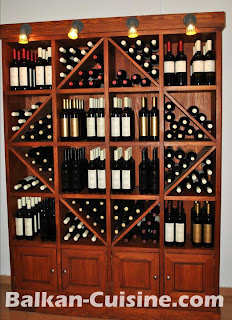
Balkan Wines – Balkan Wineries

Balkan Wines
The beverage that has marked the whole era of humankind is wine. The Romans and Greeks worshiped Dionysus, also known as Bacchus, as the god of wine and merriment. Moreover, wine is important for many religious traditions, such as the Jewish Passover and the Christian Eucharist. It seems that wine has been around us ever since the first men’s footstep. Also, it is believed that wine first appeared in the Balkans around 4500 BC, so here is a small overview of Balkan wineries.

Bulgaria

On one hand, there is Bulgaria which produces wines since the Thracian times. Due to administrative reasons, the vineyards in Bulgaria are classified into five regions, and there are no vineyards only around the capital city, Sofia. One of the wine regions is the Eastern Region, which is affected by the Black Sea climate, and white wine is the most produced wine in this region. Some of the most famous wineries are Varna and Khan Krum. Another region is the Northern Region, and in this area it is produced white and red wine. Well-known wineries from this region are Russe, the Suhindol and Svishtov. Next on this list is the Southern Region which the most familiar for its red wines, and Plovdiv and Assenovgrad are the most eminent wineries. Another wine region is South-Western Region which has the warmest climate of all regions, and red wine is its special. The vineyard that marks this region is Melnik. Finally, the Sub-Balkan Region is the last in this list. This region produses red wine the most, and the recognized winery is Sliven.

Bosnia and Herzegovina

On the second hand, there is Bosnia and Herzegovina with its unique wine taste. The wineries in this country are few, but the wine is one of a kind, and there is no even similar taste no where in the world. The oldest winery in the country is Hepok Vinarija. This winery is founded in 1886 during the Austro-Hungarian Empire. Another winery, which is very exclusive, is Brkic wine family cellar. What makes this winery one-and-only is that there is produced high quality wines, Zilavka and Blatina, which are symbols of the country.


Montenegro

Montenegro, one of the youngest country in Europe is next on our wine list. Only the south part of the country is suitable for wine growing.

The leading “force” in Montenegro is Plantaze, which is the major producer of bottled wine in the former Yugoslavia. It produces Krstac which is wine made of the same called grape only grown in Montenegro and Serbia.


Romania

One of the world’s largest wine makers is Romania, which has same climate as France, the wine country. Romania has four wine regions. One is Tarnave which produces the fruity wines due to the cool climate, and famous wineries in this region are Medias, Tarnaveni, Valea Nirajului, Zagar, Jidvei, Blaj and many more. Another region is Dealu Mare translated as Big Hill. Because it is old in tradition, this region is believed to be the cradle of red wines. The eminent vineyards are Ceptura, Tohani, Urlati, Valea Calugareasca, Tohani, Pietroasa and Breaza. Then, on our list comes Cotnary which produces the sweatiest wines in Romania. Frumusica, Cotnari and Cucuteni are well-known wineries in the region. Finally, Murfatlar is the one of the most important wine regions in Romania. It is placed near the Black Sea which provides needed humidity and freshness in growing grape. Vineyards that mark this region are Medgidia, Cernavoda, and Adamclisi.

Balkan Vineyard

Croatia

Another Balkan country that has perfect wine is Croatia. Its wine has very long history since 5th century BC when the wine was introduced by the Greek settlers, and since then Croatian wine has reaching its peak over and over again. Croatia produces 700 types of wine and has over 300 vineyards which are divided into costal and interior wine regions.

Slovenia

Furthermore, the country that kept the wine heritage is Slovenia which has several wine regions that will last forever. One of them is known as Goriska Brda which produces high quality wine. Another one is the coastal region Kras near the city Koper. Moreover, Podravski or also known as the valley of the Drava River and Posavski or the valley of Sava River are regions that produce unique wine typically only for Slovenia.

Macedonia

Nothing goes without the heart of the Balkan, Macedonia. This country is also placed on our list of Balkan wine countries. Macedonia is sunny, mountainous country whose climate is influenced by the Mediterranean Sea, which makes Macedonian wine only one of its kinds. Furthermore, Macedonian vineries produce all kinds of wine. The dominant role in wine making has Tikves which produces 2/3 of Macedonian wine. This vinery is placed in the centre of the country, and it covers cities Negotino and Kavadarci. Demir Kapija is another town famous for the wine production. Almost all cities in Macedonia have vineries with brilliant wines which taste amazingly.

Serbia

The last one on our list is Serbia. Same like the other Balkan countries, Serbia has an excellent climate for producing wine. Also it has several wine regions which create unique wines. Kinds of grape that are symbols of Serbia are Temjanika and Prokupac.

To conclude, all countries on the Balkan are perfectly wine makers having very old tradition in the production of a quality wine. I could say that wine is embedded deeply in human culture and society especially in the Balkans. Another eminent proof that Balkans is the cradle of wine is the fact that all countries have wine festivals such as Wine Fest in Sarajevo, Tikveski Grozdober in Kavadarci, Vinoskop in Skopje, Vinaria in Plovdiv, Wine Gourmet Festival in Zagreb and many, many more. Your choice is to came, try some wine, try some traditional Balkan dishes and have a wonderful time on the Balkan.


Share/Save/Bookmark

Sunday, August 8, 2010

Sarma

Ingredients:
  • cabbage or grape-vine leaves
  • 1 coffee cup with rice
  • 2 onion pieces
  • 0,5kg. mixed ground meat
  • 250g. steamed meat
  • oil, pepper, salt and spices
Sarma is a traditional meal in the most of the Balkan countries especially for Christmas Eve. It is a heavy dish and usually eaten in the winter days. Here are the directions how to prepare this meal:

Rinse well the leaves, pour over with hot water and drain. Cut the onion into small pieces and fry it on oil. Add ground meat, red pepper, pepper, salt, spices and rice. Then use the mixture to stuff the pickled cabbage or grape-vine leaves. Line them up in a pot, but first line up pickled cabbage at the bottom of the pot.

Put the steamed meat in between the stuffed cabbage leaves. Then, spill over sarma some hot water and boil it on a silent fire and then put them in the oven to bake.

By the end of the baking you can add some oil and red pepper, which have been fried before. Cover the pieces with pickled cabbage leaves. The whole has to be dry, not very moist. You can serve sarma with sour cream or yogurt.


Share/Save/Bookmark

Monday, April 26, 2010

Bosnian tufahije

Ingredients:
  • 6 cooking apples
  • 200g. walnuts, finely chopped
  • 100g. sultanas
  • 500g. sugar
  • 200g. whipping cream
Bosnian tufahijeTufahije is a Balkan dessert made of walnut-stuffed apples stewed in water with sugar, very popular in Bosnia and Herzegovina. Tufahije were introduced during the Ottoman rule, the dessert probably originating from Persia. Here are the directions for preparing:

Peel and core the apples and than mix the walnuts and sultanas. Arrange apples on a baking dish and fill with the walnut mixture. Dissolve the sugar in 1l. water and pour over the apples. Bake until the apples are soft but not soggy! Serve cold with whipped cream.


Share/Save/Bookmark

Sunday, October 4, 2009

Ajvar

Ingredients:
  • 4 aubergines
  • 8-12 fresh red paprika
  • chili peppers to taste
  • 1-2 dl. oil
  • 1 onion, minced
  • 2 garlic cloves, chopped
  • 1 tablespoon lemon juice (or 1 tablespoon red wine vinegar)
  • salt and pepper to taste
AjvarAjvar is a popular appetizer made of roasted paprika, ripe tomatoes, and even string beans can be combined into ajvar. Ajvar is a seasonal dish in Macedonia, Serbia and other former parts of Yugoslavia, always made in late summer and early autumn, just after the paprika harvest, when many households bottle their own ajvar for use throughout the winter season. Here are the directions:

Wash aubergines, drain, put into the heated oven (175-200°C) and bake then peel while still warm. Wash paprika's, wipe and dry fry on top the stove, then put into deeper dish, sprinkle with cold water, cover and leave to cool. Skin cooled paprika's and remove seed. Grind paprika's and aubergines together. Peel onion, chop finely, cook slowly in heated oil until quite soft. Towards the end add cleaned and crushed garlic, cook shortly together, set aside, add ground paprika's and aubergines and mix (very often ajvar is prepared without adding onion and garlic).

Turn all into a deeper dish and drip in oil slowly, stirring all the time. When all the oil is used, add lemon juice or vinegar, salt, pepper and mix well. Put into a bowl, shape nicely, sprinkle with more pepper if desired and pour over with some more oil.

Serve as an appetizer to spread on thick slices of country-style white bread or flat pita bread with chunks of feta cheese, or use as a side dish to accompany grilled or roasted meats.

Ajvar is put into small clean jars pressed tightly so that there are no bubbles in them and the jars covered with cellophane ot parchment.

Worth reading:


Share/Save/Bookmark

Sunday, September 6, 2009

Bosnian Somun

Ingredients:
  • 1kg. flour
  • 2 tablespoons dry yeast (2 envelopes or 14g.)
  • tablespoon salt
  • teaspoon sugar
  • 600 – 700 ml. warm water
  • black cumin to strew
The word "somun" itself alludes to the smell spreading across the streets of Sarajevo. The vendors offer hot somuns on the streets, taking the deliciously smelling flatbreads – good only while hot – from the boxes under steam-covered paper. These flatbreads made of gently kneaded dough are baked at very high temperatures, which results in their characteristic puffed-up shape and a hollow body. The more hollow the middle, the better the somun. It works best with kajmak or topa (salt clotted cream, and molten butter with cream, respectively). In any case, it is indispensible alongside cevapcici and sliced onion.

In a small bowl, mix two teaspoons of yeast and 200 ml of lukewarm water; add one tablespoon of flour and a teaspoon of sugar. Then, let the yeast activate.
In a large bowl, combine the flour and salt. Add the leavening to the flour and knead the dough with 500 ml. warm, but not hot, water. The dough should be very soft.

Let the dough rise until double in bulk. Then, knead and let rise again.
When the dough has risen for the second time, cover your hands in flour and split it into 8 balls of same size. Cover the balls with a clean kitchen towel and let them rise some more.
Roll each ball in flour and form into a flatbread; avoid flattening too much, as the somuns may otherwise be too thin. Transfer the somuns on a baking tray covered with waxed paper.

Brush the somuns with water and strew some black cumin on them. Use a knife or a wooden spit to make a rhomboid pattern on the top side.
At first, bake the somuns at 230 degrees; when their colours starts turning golden, reduce temperature to 150 °C and bake for another 10 to 15 minutes.

Source: Gorenje.com

Related recipes:

Share/Save/Bookmark

Thursday, July 23, 2009

Bosnian red pilaf

Ingredients:
  • 2 lbs. lamb or beef, cut into 1/2" cubes
  • 8 cups water
  • 1 cup carrots, cut into chunks
  • 1 cup parsnips, cut into chunks
  • 1/2 cup celery root, cut into chunks
  • 1 tbsp. salt
  • 1 tbsp. peppercorns
  • 1/2 cup (1 stick) butter
  • 4 cups tomatoes, peeled, seeded and chopped
  • 5 cups rice
  • 2 tsp. salt
  • 1 tsp. pepper
In a large pot, cover the meat with 8 cups of water and bring to a boil. Skim off the foam that rises to the top, then add the carrots, parsnips, celery root, salt and peppercorns. Return to a boil, reduce the heat and simmer for 1-1/2-2 hours, until the meat is tender. Strain the stock, set aside the meat and discard the vegetables.

Clean out the pot and melt the butter. Saute� the tomatoes for 10-15 minutes, until they begin to disintegrate. Pour in the rice and continue to saut� for another ten minutes, until the rice becomes translucent. Add 2 tablespoons salt and 1 tablespoon pepper and stir well; then add the meat and stock. Bring to a boil, cover the pot, reduce the heat to low and cook for 20-30 minutes, until the rice is tender and ready to serve.


Share/Save/Bookmark

Saturday, June 27, 2009

Stuffed peppers

Ingredients:
  • 10-15 bigger paprikas/peppers
  • 1-1.5dl. oil
  • 2 onions
  • 150g. rice
  • 700g. mixed ground meat
  • salt and pepper
  • ground hot paprika
  • tomato
  • lukewarm water
Photo of stuffed peppersStuffed peppers, Punjena paprika (Serbia, Bosnia and Montenegro), Polneti piperki (Macedonia), Pulnena paprika/Pulneni chushki (Bulgaria) or Ardei umpluti (Romania) is a famous Balkan dish consisting of paprikas/peppers filled with mixture of meat and rice. There are many variations of stuffed peppers across Balkan countries but here we present you the basic recipe that can you modify by taste:

Slice the tops off the peppers. Pull out the seeds and the cores. Dip them in warm water and leave to get soft.

Heat oil, add finely chopped onion, cook it slowly until sloghtly brown. Pick over rice, wash and cook in salted water, rise, drain and add to soft onion, then stirr in meat. Cook slowly together, add salt, pepper and ground paprika. Cool a little.

Place the pepper shells in a baking dish that will hold them snugly together. Spoon the filling into the peppers. Replace the tops with peace of tomato. Pour 3 tablespoons of water around the peppers and bake for about 30 minutes in the oven preheated to 175°C until filling is puffed and the peppers are soft. Serve warm or cold.


Share/Save/Bookmark

Monday, May 25, 2009

Prebranac

Ingredients:
  • 700g. of large white beans
  • 700g. onion
  • 1 large carrot
  • 3 bay leaves
  • paprika powder
  • salt and pepper
  • oil
Put beans in a cold water and let it boil for about 10 minutes. Discard water and replace it with new, hot water. Add salt and sliced carrot. Cook until beans get cooked but each bean must remain solid. Take beans from water and dry it but keep the water.

Chop onion in large ribs and put in hot oil until it becomes golden brown. Add 1 tablespoon of paprika powder, mix it well for 30 sec and remove from the heat. Take onion from oil and mix with beans and bay leaves. Put it in a large and deep bowl pour with some water that left after cooking. Put beans in owen and bake it until the top becomes dark brown.

Prebranac can be served both hot or cold and depending on amount of water you put, it can be almost completely dry or it can be like very thick sauce. Try it. It is really great.


Share/Save/Bookmark

Tuesday, May 5, 2009

Bosnian easy cake

Ingredients:
  • 2 cups flour
  • 1 cup granulated sugar
  • 1 cup oil
  • 1 cup water
  • 3 tablespoons cocoa
  • 1 teaspoon baking soda
This is a traditional and simple Bosnian cake using basic kitchen ingredients:
Preheat oven to 350 degrees F. and then combine all dry ingredients. Add wet ingredients, stir until well combined. Pour into 2 greased cake pans. Bake in oven until set, when wooden rod or toothpick is inserted and comes out clean.

Share/Save/Bookmark

Tuesday, April 14, 2009

Sarajevo okra soup

Ingredients:
  • 300g. veal, cubed
  • 50g. fresh okra, sliced
  • 2 tbsp butter
  • 1 tbsp sour cream
  • 2 tbsp flour
  • 40g. carrots, diced
  • 40g. onions, diced
  • 1 tbsp flat-leaf parsley, chopped
  • 2 egg yolks
  • 100g. lemon slices
Sarajevo Okra Soup is a traditional Bosnian recipe for a classic soup made with veal meat, okra and vegetables which is thickened with egg yolks and decorated with lemon slices before serving. Preparation:
Melt the butter in a frying pan and use to fry the veal until browned all over then stir-in the carrots and onions. Cook over medium meat for about 8 minutes then scatter the flour over the top and stir to combine.
Transfer the mixture to a saucepan then stir-in 750ml water along with the okra. Season to taste then bring the mixture to a boil. Meanwhile, whisk together the egg yolks and sour cream in a bowl. Add this slowly to the soup, whilst whisking constantly. Immediately take the soup off the heat and stir-in the parsley. Ladle into warmed soup bowls then float the lemon slices on top and serve.
Source: Celtnet.org.uk

Related articles:

Share/Save/Bookmark

Tuesday, April 7, 2009

Tirit - Chicken Pie

Ingredients:
  • chicken
  • water
  • 2 carrots, shredded
  • 1 parsnip, shredded
  • 1/2 cup oil or butter
  • 2 bunches green onions, chopped
  • 1 bunch of parsley, chopped
  • salt & pepper to taste
  • 1 package phyllo dough
  • 2 cups sour cream
  • 1/4 to 1/2 cup milk.
Tirit is a traditional Bosnian dish that can be served as an appetizer, but also as a lunch or dinner entree. Here are the instructions how to prepare the recipe:
Wash the chicken inside and out. Put in a large cooking pot, fill with water and add shredded carrots and parsnip, season with salt and pepper. Simmer until the chicken is cooked through and tender, about an hour. Remove the chicken from the broth, filter the broth and keep for other uses. Discard vegetables.
Let the chicken cool down and then remove meat from the bones, making sure the meat remains in large pices. Put chicken in a bowl and discard bones and skin.

Meanwhile, heat some oil and fry the green onions until soft. Add the onions and chopped parsley to the chicken and season with more salt and pepper.
Heat the oven to 350F.
Oil a large, deep baking pan and place 10 layers of phyllo dough, brushing each one with oil or melted butter. Put the chicken on the phyllo, level and cover with 10 layers of dough, brushing each one with oil or butter.
Mix the sour cream with the milk and pour it over the pie.
Bake the pie for about 45 to 50 minutes. When done sprinkle with water, cover and let stand for a while. Serve warm.
Source: Margarita's Recipes

Related articles:

Share/Save/Bookmark

Tuesday, March 24, 2009

Pie with meat

Ingredients:
  • 6 Pie Breads (or one packet shop-bought)
  • 3 large onions, chopped
  • 3 tbsp olive oil
  • 900g. pork, cubed
  • 2 large eggs
  • salt and pepper
Pie or pita with meat is a traditional Bosnian recipe for a pizza-like dish of pork, onions and eggs spread over pie breads which is oven-baked until set.
Heat the oil in a pan and use to fry the onions until golden (about 10 minutes). Add the pork and continue frying until the meat is thoroughly browned all over.
Take off the neat at this point and stir-in the eggs and season to taste with salt and freshly-ground black pepper. Mix thoroughly to combine then arrange the pie breads on a lightly-oiled baking tray. Spread the meat mixture over the top of the pita breads then transfer to an oven pre-heated to 210°C and bake for about 8 minutes, or until the eggs are set and golden brown. Serve hot.
Source: Celtnet recipes

Share/Save/Bookmark

Monday, March 16, 2009

Bosnian spinach pie (zeljanica)

Ingredients:
  • 1 package filo pastry
  • 2 bags washed fresh spinach
  • 2 eggs
  • 1/4 cup sour cream
  • 1/2 lb ricotta or cottage cheese
  • olive oil
  • 1-1/2teaspoons salt
  • milk
  • plain yogurt (optional)
Preheat oven to 350F. Wash and drain spinach. Chop spinach and put in a big glass bowl. Add salt and mix with hands. Leave for about 10 minutes and then drain the excessive water. Mix together eggs and sour cream and add to spinach. Add cheese to the mixture. Grease a baking pan. Take filo sheets and lay them on a dry surface.(While adding the filling, you may wish to cover the sheets with a dry towel and then a damp one to keep it from drying out or flaking.) Place one sheet of pastry into the pan and cut away excess. Brush with oil, using either your hands or a pastry brush. Repeat for 6 or 7 layers. Add a skim of filling and spread evenly. Repeat until the pie reaches the top of the pan or you run out of ingredients, but make sure you finish with the pastry on top. Place pie in the oven, uncovered, for about 35 minutes. Pour on top of the pie while it is baking, 1/4 cup sour cream blended with 0.125 cup of milk. Bake for another 15 minutes. This dish can be served warm or room temperature. It is traditionally served with yogurt.
Source: Visit-bosniaherzegovina.com

Share/Save/Bookmark

Thursday, March 5, 2009

Cevapcici (Grilled Lamb & Beef Meatballs)

Ingredients:
  • 1 Tbsp. lard (or butter)
  • 1/2 yellow onion, finely chopped
  • 1 garlic clove, finely chopped
  • 1 lb ground lamb
  • 1 lb ground beef
  • 1 egg white, lightly beaten
  • 1 Tbsp. sweet Hungarian paprika
  • 2 Tbsp. onions, finely chopped
Heat the butter or lard in a small frying pan and when it starts to foam add the onions and garlic. Fry, stirring occassionally, until soft, around 6 to 8 minutes.

Meanwhile, mix the lamb, beef, egg and spices in a bowl. When ready, add the onion and garlic mixture. Mix well. Shape into small cylinders, approximately 1" x 2" and arrange in a plate. Cover with plastic wrap, wax paper or a towell and refrigerate for one hour to one day, to let the flavors settle and the mixture become firm.

Arrange the cevapcici on skewers about 1/4" apart from each other. Grill or pan fry in medium heat until done to your preference. Serve sprinkled with chopped onions and accompanied with pita bread.

Source

Share/Save/Bookmark

Sunday, February 22, 2009

Chicken Pie - "Burek from Sarajevo"

Ingredients:
  • 1 smaller chicken or hen
  • salt and pepper to taste
  • 1 cup of flour
  • 1 egg
  • 1/2 cup of milk milk
  • 1/4 cup of butterfat (oil or margarine)
  • 3/4 lbs. dough layers for the pie
  • butter fat or oil for greasing and sprinkling
  • 1/2 thick yogurt or sour cream
Wash chicken or hen well, put up to cook in warm water, bring to boil salt and simmer. Sift sour, mix well egg and milk. Pour the mixture over flour and knead well with fingers to get small crumbs the so called "tirit". Fry tirit quickly in heated butter or oil. Remove cooked chicken meat from bones, mince it and add salt and pepper as needed.

Grease a tepsya (baking pan) with oil or butterfat, place a dough layer in it and sprinkle it with with oil or melted butterfat. Place a few more dough layers over the same manner and cover the last with half of the tirit and chicken meat. Then place some more dough layers over, sprinkling them with fat every time, add the rest of tirit and meat, pour over with two dough layers and sprinkle with butterfat oil. Bake in the oven preheated to 175-200 C for about 35-40 min, until nicely brown.

When "Burek" is nearly done, cut it into squares, pour chicken soup over it and finish baking. While still warm, pour over it whipped thick yogurt or sour cream, put it back into the oven (leave it slightly open) and let it stand like that for a while. The well known Turkish 17th century chronicler, Evliya Tchelebia mentions this chicken "burek" as a "renewed dish" a specialty of Sarajevo (Bosnia and Herzegovina).
Source

Share/Save/Bookmark
Related Posts with Thumbnails
 
Template by: Abdul Munir