Friday, December 16, 2011

The Taste of Mediterranean Cuisine

Mediterranean food
The deep, blue sea named the Mediterranean (or Med) gives heart and life to the countries around her. The Mediterranean got its name from Latin and means “middle of the Earth” or “inland”. People in this region took the sea as the main trading source, so, obviously, people around the Mediterranean share more than a beach and water; they share history, a bit of culture and of course overlapping cuisines. They have created a varied and cosmopolitan cuisine which is one of the most famous cuisines that exist in this world. Like everything in the Mediterranean that is special, so does the Meditation cuisine is special too; every tiny detail that it owns is special; starting from Mediterranean food through out Mediterranean cooking to Mediterranean dishes. The Mediterranean cuisine could be roughly divided into three dining regions: southern European, North African and eastern Mediterranean, but it has also made an enormous influence in many cuisines. This cuisine is considered to be one of the most exotic cuisines in the World.

Keys of Mediterranean Dining

The main keys of every Mediterranean dish are the perfectly grown vegetables. All Mediterranean dishes are abundant with vegetables like peppers, onions, eggplants, mushrooms, cucumbers, squashes, garlic, artichokes and various lettuces and greens. What makes this cuisine one of a kind is the fact that the basic in the Mediterranean cooking is the usage of many herbs like basil, rosemary, mint, cilantro, oregano, parsley, dill and fennel. The heart of the Mediterranean dinning is seafood. Shellfish are extensively used in many Mediterranean dishes from stews, soups, pastas to salads. Also, anchovies are mostly eaten in the Mediterranean region, and there are many ways to prepare this fish. As well, ell, swordfish, octopus, monkfish, squid and cuttlefish are the other fish that are predominantly served.

Source for meats in Mediterranean dinning are smaller animals like goats, lambs, pork, rabbit and sheep. Beef, on the other, is uncommon for this cuisine. In addition, another key of Mediterranean dinning is the usage of olive oil. Almost all Mediterranean dishes start with olive oil. What is more about the Mediterranean cuisine is that it has mouth-watering wines especially famous are the Balkan wines. Wine is the most famous preserved drink, and it is said that Mediterranean dish is not complete if there is no wine.

Pita Bread - The Core of Every Mediterranean Dish

One of the specialties that stand for the Mediterranean cuisine is pita bread, which is a round pocket bread extremely used in all Mediterranean countries including the Middle eastern and the Balkans. Interesting about pita bread is the way of the Mediterranean cooking of the “pocket” in its middle. The “pocket” is made by stream that wisps out the dough; and as the bread flattens and cools, then the pocket is left in the middle of the bread. This pita bread could be found in all forms and sizes. Moreover the Mediterranean cooking has an interesting way of baking this bread: under “sač” which is a large lid, and the bread is covered with the “sač”, and then goal and ashes are put on the lid. Also, baking in brick oven is recommended. This kind of Mediterranean cooking is used in Montenegrin cuisine, Greece cuisine, Croatian cuisine, Turkish cuisine and many more.

We could say that pita bread is used with everything! People fill the “pocket” with everything like a sandwich. In the Greece cuisine pita bread is the main component of pita-gyros and pita-souvlaki. Also, it is consumed with dips like tzatziki. Furthermore, pita in Turkish cuisine (or pide) is used for all pizza-like meals, and here it has a soft texture and it has not got a pocket. One of the pizza-like Mediterranean Turkish dish is lahmacun. Also, pita bread is widely used in whole Balkan countries. In addition, pita bread is sacred to the people where it is used, so there are many customs connected with pita bread. One of them is the pita bread with a hidden coin in it used on the night before Christmas Eve.

Mediterranean Cuisine – World’s Healthy Diet

It is believed that Mediterranean dinning is very healthy, so the modern nutritionists have made a special diet named the Mediterranean diet. Furthermore, it is said that Mediterranean cooking stands for naturally healthy eating. All healthy diets contain vegetables, fish and vegetables which are the keys of Mediterranean dining. UNESCO has recognized Mediterranean diet as an Intangible Cultural Heritage of Italy, Greece, Spain and Morocco in 2010. Thos diet has made a great impact in every aspect of human health. Researches have shown that the traditional Mediterranean food prepared with the Mediterranean cooking reduces the risk of heart disease, a reduced incidence of cancer and cancer mortality, and a reduced incidence of Parkinson's and Alzheimer's diseases.

To conclude, Mediterranean cuisine isn’t ruled by a single culture, it is a creation of cultural exchange and influence, thus you can be easily confused about the Mediterranean dishes because many countries serve the same dish. It is a highly rich cuisine, with many interesting ingredients. Fresh vegetables, fruits, fish and the high level of olive oil usage make the Mediterranean cuisine World’s number one healthy diet recognized by many famous nutritionists. Also, there would not be a Mediterranean dish if there is no pita bread and wine.

Books about Mediterranean cuisine:

Photo: maveric2003


Share/Save/Bookmark

Wednesday, November 23, 2011

Overview of Serbian Cuisine

Another Balkan cuisine which has been influenced by the neighbouring countries is Serbian cuisine. This cuisine is made of mixed traditions, and you could see the influence of Mediterranean, Turkish, Austrian and Hungarian cuisines. Moreover, Serbian cuisine is very strong and rich, and its meals are based mostly on meat and dairy products. Daily Serbians have three meals: breakfast, lunch and dinner. The largest and most important is the lunch.

Now, we will describe some of the most famous dishes in Serbia only to give you a clue how the Serbian cuisine looks like. First, we would start with cheese, which Serbians use in almost every meal. The cheese varies in taste and shape depending in which area of Serbia it is produced. It could be from soft and creamy like sremski cheese to hard like sjenica cheese, but the best cheese could be found east of the Morava River. One of the rare authentic specialties is kajmak, and the most recommended kajmak is the one from the Cacak area.

Another product without which a Serbian meal could not be imagined is bread. Also, the bread is used for religious rituals, for example a traditional Serbian welcome is to offer the guest only bread and salt. It is believed that to throw bread is sinful no matter how old the bread is. What is on a special place in Serbian cuisine is gibanica and burek. Gibanica is layered cake filled with various fillings. It could be salty or sweet, and the fillings could be made of cabbage, spinach, cherries, poppy seeds and etc, but the real Serbian gibanica is the one made of cheese and kajmak served with a glass of yoghurt. Burek is a stuffed dough layers with meat or cheese.

Furthermore barbecue is placed on the highest ladder of Serbian food. Everyone enjoys in chevapchichi (grilled minced-meat fingers) served with kajmak and a lots of chopped onion. Pljeskavica, vešalica, muckalica are other Serbian grilled meat specialties. If you could not make up your mind what kind of Serbian barbecue to choose, you can order a mixed plate of grilled meat which is a portion that has a bit of everything. Leskovacka grill is the most famous barbecue not only in Serbia, but in the whole Balkan region.

What is more in the Serbian cuisine are soups. These are frequently used before the main meal and the most common soups are the simple pottage made of beef or poultry with vegetables and noodles. Riblja corba is the soup that stands out in taste and quality. Also, sarma and prebranec are traditional meals in Serbia. Sarma is found in every Balkan country, and the way of preparation is same: minced meat rolled in pickled cabbage leafs, while prebranec is cooked white beans with onion, salt, dry paprika and oil, also it is common to put sausages, bacon or dried ribs in it.

Serbian cakes are very sweet with lots of fruit, nuts or cream. Slatko is eminent Serbian sweet specialty that represents a conserving fruit similar to jam. One of the most used beverages is rakija, a kind of a brandy. Also there are different kinds of rakija named after the name of the fruit that they are made of like: jabukovica (apple brandy), lozovaca (grape brandy), šljivovica (plum brandy) and many more. In addition to the beverages, wine and beer are also very popular drinks in Serbian cuisine.

To sum up, Serbian cuisine is another cuisine on the Balkan region and the different influences during the years of its existence makes it a very heterogeneous. It has very mouth-watering meals that certainly will make you try everything. Serbian barbecue is a must!


Share/Save/Bookmark

Monday, October 31, 2011

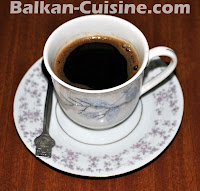
A Drop of Turkish Coffee

Turkish Coffee
The legend of man’s beverages starts when man drank a marvellous sip of coffee for the first time. Coffee has changed everything! Now we would try to introduce some relevant facts about coffee including its origin, name, preparation and why it is so important and interesting in drinking Turkish coffee.

Overview of Turkish Coffee History

The origin of the coffee is very mysterious like the taste itself. It is believed that coffee has three hundred years old history. The first coffee beans were harvested in Ethiopia. The legend says that a young shepherd called Kaldi noticed how his goats stayed awake after eating coffee beans, and then he has tried those magical beans for himself. So, the new era has begun! In 1555 coffee beans were brought in Turkey by Syrian traders, and there coffee has marked the whole age of humankind, and everyone knows that Turkish coffee is the mother of all sorts of coffees.

Furthermore, the name “coffee” comes from the Arabic “gahwa”, which Turkey has borrowed and derivate to “kahve”. All other countries have taken the name from Turkey, and derivate to their own language, but the core of the word remain the same, so coffee is the word that everyone around the world will definitely understand. In some period of the history coffee has become a real treat to the Ottoman Empire because people drank coffee gathered together, and they discussed about everything including the political situation in the country. These political discussions have led the leaders of the empire to think that some day coffee drinkers will cause rise against the Empire. Therefore in 1656 a law was forced that shut down all coffee houses, and drinkers were declared as outlaws. Instead of reducing the coffee, this law has made it even more popular.

Turkish coffee was accidentally introduced to the rest of the world when the Turkish army was retreated from Vienna, fortuitously left begs with coffee beans. Quickly, Austrians grasped the coffee fortune and started to make their own kind of coffee served on a special way, with cake named “kipfel”, today’s known as croissant. “Kipfel” has symbolic meaning: its shape is exactly like the crescent moon from the Turkish flag, and it stands for celebration of the victory over the Turkish army.

How to prepare a perfect cup of Turkish coffee


In old times, in Turkey young women were learned to prepare an excellent coffee because their future depended of it. Their potential husbands judged if a woman was a perfect for marriage if she knew to make a good cup of Turkish coffee. Therefore preparation is very essential for making Turkish coffee.

Today it is not like this at all, but the custom of future bride making coffee for her husband-to-be on their engagement still remains.


In order to make a perfect cup of Turkish coffee, we should follow several steps. What we need is a coffee pot, grinded coffee beans, spoon and sugar according to the taste. First we measure the amount of water, then we place the pot with the water on a stove, and the heat is turned on medium. When the water starts to heat up, add one tablespoon of Turkish coffee and sugar, and remember do not stir it. Notice that one tablespoon of coffee is enough for one cup of coffee. The coffee should float on the surface. Next wait until the coffee starts to sing and mingle with the water, and then stir it, and turn down the heat to low. When a bubble ring starts forming on the surface move the pot away. Never let your coffee boil! The secret of Turkish coffee is to let it create thick foam. Then, pour the coffee in cups, and make sure that there is equal amount of foam in every cup. At the end, enjoy in your perfect cup of Turkish coffee!

Why is drinking Turkish coffee so extraordinary?

We could say that Turkish coffee has unique power that no other drink has. Here are some interesting facts:

1. It makes you stop and rest because it is never drunk in a hurry
2. Turkish coffee makes you more patient due to its preparation that takes a bit longer then the preparation of other drinks.
3. You become very calm while you are drinking it
4. Turkish coffee is good for encouraging conversation as it is usually shared with someone
5. Turkish coffee is good for you to have it after a meal due to the fact that it is very helpful in the digestion process
6. What is also very important is that Turkish coffee is not carcinogenic and it is very economical. According some studies, coffee reduce the risk of some common medical illnesses too
7. Furthermore, Turkish coffee has a tradition of fortune-telling by reading the figures left of the coffee grinds.

To conclude, coffee has made an enormous revolution in men’s culture. It has been proven that Turkish coffee has a tremendous history that makes this drink even more exotic and beautiful. In addition Turkish coffee’s idea is to bring people together, giving them time for relaxation and enjoyment.


Share/Save/Bookmark

Sunday, October 16, 2011

Top 10 Books About Balkan Food

1. The Melting Pot: Balkan Food and Cookery
Author: Maria Kaneva-Johnson

2. The Balkan Cookbook
Author: Vladimir Mirodan

3. Cooking in Croatia & Bosnia: 425 Croatian and Bosnian Recipes
Author: Karmela Kis

4. The Balkan Cookbook: Traditional Cooking from Romania, Bulgaria and the Balkan Countries
Author: Catherine Atkinson

5. Bulgarian Rhapsody: The Best of Balkan Cuisine
Author: Linda Joyce Forristal

6. The Foods of Greece
Author: Aglaia Kremezi

7. Gregory’s Mediterranean Cuisine: Recipes of Albania, Macedonia, Croatia, Turkey & Greece
Author: Dr. Gregory Evangelos Zotos Ph.D.

8. The Food & Cooking of Romania & Bulgaria: Ingredients and traditions in over 65 recipes with 300 photographs
Author: Silvena Johan Lauta

9. Lonely Planet World Food Turkey
Author: Dani Valent

10. Best of Albanian Cooking: Favorite Family Recipes
Author: Klementina Hysa


Share/Save/Bookmark

Friday, September 30, 2011

Overview of Montenegrin Cuisine

Eating Balkan food is very rich experience since all countries’ cuisines mingle with each other. One of the Balkan’s countries that has diverse cuisine is Montenegro; and its cuisine could be divided into 3 types: Northern, Continental and Mediterranean depending of the region where it is served. Mainly this cuisine is influenced by Turkish, Serbian, Hungarian, Mediterranean and Austrian cuisines. Taken as a whole, all Montenegrin products are organic, therefore the meals are astonishing. Here is a list of the most popular and highly traditional Montenegrin meals:

First on you delicious list are soups which are the most common meals in Montenegro, and mostly they are made of meat and vegetables. The most famous Montenegrin soup is the fish soup made of dry fish with garlic and onion, and what is specific about this soup is that it is served cold. The second place comes for kačamak which is a strong, squashy meal that is prepared of wheat, barley, buckwheat or corn flour. This dish is served with sour milk and cheese. Also there is a wet kačamak in which cheese is added during the preparation. One of the most interesting variations of “kačamak” is the one made of potatoes. This meal is extremely delicious, and certainly will leave you breathless.

Next on my list is reserved for cicvara which is a kajmak, sort of young cow’s cheese, mixed with flour until the grease is released. This meal is being served with sour milk and cooked potato, and it has huge energetic value. Then comes rastan also known as wild cabbage which is a vegetable found in this region. In USA it is found under the name “collared greens”. This dish is cooked with potatoes, many spices and herbs. One more tasty meal is japraci which is one is the richest Montenegrin dishes. It is made of “rastan”, calf’s meat, peppers, rice and dry meat. The truly specialty of the house is Montenegrin Lamb in Milk. It is prepared of meat cooked in home-made milk with potatoes and spices, and this meal is served especially for solemn occasions. Moreover, Montenegrins have a very interesting method for cooking meat in “sač” which is a large metal cap used for baking meat and bread. The meal is covered with this metal cap, and ashes and goals are put above the cap. A mouth-watering dish cooked in this way is baked lamp; it keeps its natural aroma and the way of cooking is very exotic. Popeci is another amazingly good dish found in Podgorica. It is a roll made of veal’s meat, a piece of kajmak and smoked ham, then fried in deep oil. What you get is scrumptious meal with juice interiors and crispy exterior.

Every cuisine is not complete if there are not drinks served on the table; therefore our Montenegrin beverage list is made of few remarkable drinks unique for this country. Wine in Montenegro has long tradition due to the perfect climate, and all wines have single flavours. Like all Balkan countries, so does Montenegro is famous for rakija, strong brandy, made of different kinds of fruits. Moreover, Montenegro has only one, but very powerful brewery which produces the well-known beer among the Balkan’s countries, Nikšičko beer. Last but not least on over list is buttermilk which is a traditional drink similar to yoghurt with salty taste.

To conclude, food in Montenegro has many different styles which are very connected to the other Balkan’s cuisines. It holds variety of meals, unique in their region but similar to the neighbours’, tasty in every way of the word.


Share/Save/Bookmark
Related Posts with Thumbnails
 
Template by: Abdul Munir