Showing posts with label Bulgarian Cuisine. Show all posts

Sunday, February 12, 2012

Kacamak (Cornmeal)

Kacamak, Kachamak, Bakrdan

Ingredients:
  • 400g. Cornmeal
  • 1l. water
  • Salt
  • Oil
Kacamak that is also known as: Kačamak, kachamak or bakrdan is a traditional dish in Serbia, Bulgaria, Albania, Macedonia, Bosnia and Montenegro that is made of cornmeal/cornflour. Instructions for the recipe are very simple:

Put water in a deep bowl, bring to the boil, add salt and gradually add the corn flour, stirring continuously to avoid lumps. The mash should be medium thick.

Cook for half an hour and when cooked pour over with hot fat or oil. You can add potatoes, cheese, hot pepper or kaymak. Serve with yogurt or sour milk


Share/Save/Bookmark

Friday, January 6, 2012

Russian Salad (Ruska Salata)

Russian Salad (Ruska Salata)

Ingredients:
  • 3 potatoes, boiled and chopped
  • 2 carrots, chopped
  • 1 can of green peas
  • 300g. of ham, chopped
  • 300g. mayonnaise
  • 100g. olives, chopped
  • 5 pickled cucumbers, chopped
  • salt to taste

Cook the potatoes and after that cut into slices as same as the carrots, ham, olives and cucumbers. Take all the ingredients (except mayonnaise) in a serving bowl and mix all slowly.

Add salt to taste. You can add pepper too. Now mix it all with mayonnaise. You can garnish with parsley and olives.

Keep in fridge at least for an hour before serving. Try Russian Salad with kiflichki instead of bread. Enjoy


Share/Save/Bookmark

Sunday, July 10, 2011

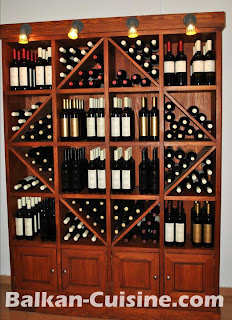
Balkan Wines – Balkan Wineries

Balkan Wines
The beverage that has marked the whole era of humankind is wine. The Romans and Greeks worshiped Dionysus, also known as Bacchus, as the god of wine and merriment. Moreover, wine is important for many religious traditions, such as the Jewish Passover and the Christian Eucharist. It seems that wine has been around us ever since the first men’s footstep. Also, it is believed that wine first appeared in the Balkans around 4500 BC, so here is a small overview of Balkan wineries.

Bulgaria

On one hand, there is Bulgaria which produces wines since the Thracian times. Due to administrative reasons, the vineyards in Bulgaria are classified into five regions, and there are no vineyards only around the capital city, Sofia. One of the wine regions is the Eastern Region, which is affected by the Black Sea climate, and white wine is the most produced wine in this region. Some of the most famous wineries are Varna and Khan Krum. Another region is the Northern Region, and in this area it is produced white and red wine. Well-known wineries from this region are Russe, the Suhindol and Svishtov. Next on this list is the Southern Region which the most familiar for its red wines, and Plovdiv and Assenovgrad are the most eminent wineries. Another wine region is South-Western Region which has the warmest climate of all regions, and red wine is its special. The vineyard that marks this region is Melnik. Finally, the Sub-Balkan Region is the last in this list. This region produses red wine the most, and the recognized winery is Sliven.

Bosnia and Herzegovina

On the second hand, there is Bosnia and Herzegovina with its unique wine taste. The wineries in this country are few, but the wine is one of a kind, and there is no even similar taste no where in the world. The oldest winery in the country is Hepok Vinarija. This winery is founded in 1886 during the Austro-Hungarian Empire. Another winery, which is very exclusive, is Brkic wine family cellar. What makes this winery one-and-only is that there is produced high quality wines, Zilavka and Blatina, which are symbols of the country.


Montenegro

Montenegro, one of the youngest country in Europe is next on our wine list. Only the south part of the country is suitable for wine growing.

The leading “force” in Montenegro is Plantaze, which is the major producer of bottled wine in the former Yugoslavia. It produces Krstac which is wine made of the same called grape only grown in Montenegro and Serbia.


Romania

One of the world’s largest wine makers is Romania, which has same climate as France, the wine country. Romania has four wine regions. One is Tarnave which produces the fruity wines due to the cool climate, and famous wineries in this region are Medias, Tarnaveni, Valea Nirajului, Zagar, Jidvei, Blaj and many more. Another region is Dealu Mare translated as Big Hill. Because it is old in tradition, this region is believed to be the cradle of red wines. The eminent vineyards are Ceptura, Tohani, Urlati, Valea Calugareasca, Tohani, Pietroasa and Breaza. Then, on our list comes Cotnary which produces the sweatiest wines in Romania. Frumusica, Cotnari and Cucuteni are well-known wineries in the region. Finally, Murfatlar is the one of the most important wine regions in Romania. It is placed near the Black Sea which provides needed humidity and freshness in growing grape. Vineyards that mark this region are Medgidia, Cernavoda, and Adamclisi.

Balkan Vineyard

Croatia

Another Balkan country that has perfect wine is Croatia. Its wine has very long history since 5th century BC when the wine was introduced by the Greek settlers, and since then Croatian wine has reaching its peak over and over again. Croatia produces 700 types of wine and has over 300 vineyards which are divided into costal and interior wine regions.

Slovenia

Furthermore, the country that kept the wine heritage is Slovenia which has several wine regions that will last forever. One of them is known as Goriska Brda which produces high quality wine. Another one is the coastal region Kras near the city Koper. Moreover, Podravski or also known as the valley of the Drava River and Posavski or the valley of Sava River are regions that produce unique wine typically only for Slovenia.

Macedonia

Nothing goes without the heart of the Balkan, Macedonia. This country is also placed on our list of Balkan wine countries. Macedonia is sunny, mountainous country whose climate is influenced by the Mediterranean Sea, which makes Macedonian wine only one of its kinds. Furthermore, Macedonian vineries produce all kinds of wine. The dominant role in wine making has Tikves which produces 2/3 of Macedonian wine. This vinery is placed in the centre of the country, and it covers cities Negotino and Kavadarci. Demir Kapija is another town famous for the wine production. Almost all cities in Macedonia have vineries with brilliant wines which taste amazingly.

Serbia

The last one on our list is Serbia. Same like the other Balkan countries, Serbia has an excellent climate for producing wine. Also it has several wine regions which create unique wines. Kinds of grape that are symbols of Serbia are Temjanika and Prokupac.

To conclude, all countries on the Balkan are perfectly wine makers having very old tradition in the production of a quality wine. I could say that wine is embedded deeply in human culture and society especially in the Balkans. Another eminent proof that Balkans is the cradle of wine is the fact that all countries have wine festivals such as Wine Fest in Sarajevo, Tikveski Grozdober in Kavadarci, Vinoskop in Skopje, Vinaria in Plovdiv, Wine Gourmet Festival in Zagreb and many, many more. Your choice is to came, try some wine, try some traditional Balkan dishes and have a wonderful time on the Balkan.


Share/Save/Bookmark

Friday, June 24, 2011

Shopska Salad

Ingredients:
  • 500g. tomatoes
  • 2 cucumbers
  • 1 onion
  • 200g. cheese
  • 1 green hot pepper
  • oil and salt
Wash tomatoes, peel and cut into slices. Peel onion and chop finely. Peel cucumbers too and cut into cubes.

Mix all slowly, pour over with oil, sprinkle with grated or crumbled cheese and with small hot pepper cut into rounds.

This delicious salad is often consumed with rakija or mastika.
Share/Save/Bookmark

Sunday, June 19, 2011

Overview of Bulgarian Cuisine

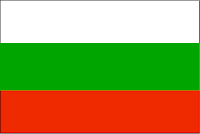
Bulgarian Flag
Balkan cuisine is a mixture of all countries’ cuisines that appear in that region. One of the well-known cuisines on the Balkans is the Bulgarian cuisine. Due to the quite warm climate, Bulgaria has brilliant conditions for growing different vegetables, fruits and herbs; hence its cuisine is highly diverse.

Bulgarian cuisine is famous for its rich salads that are obligatory dish at every meal. The salads are consumed with chilled local alcoholic drinks such as rakia, mastika and menta, which are kinds of a brandy. One of the most famous Bulgarian salads is Shopska salad, which got its name after a group of penny-wise people known as Shopi who lived in Sofia, the capital city of Bulgaria. This salad is prepared with chopped cucumbers, tomatoes, peppers and onion decorated with grated white cheese. Another tasty Bulgarian salad is Snezhanka Salad made of creamy yoghurt with chopped cucumber or gherkins, walnuts and garlic.

Other important elements in the Bulgarian cuisine are the soups, which are served hot or cold. One of the popular cold soups is tarator, made of cold yoghurt and chopped cucumber sparkled with dill. Moreover, the traditional meals that are extremely familiar and delicious are kavarma, which is a stew with beef and calf’s liver, tomatoes, peppers and onions; plakiya, strew with fish fillets with tomatoes and lemon slices; sarmi, stuffed vine or cabbage leaves with minced meat, rice or beans; kyufteta, spicy meat balls. Also, one of the most famous Bulgarian specialities is a dish called kapama made of chopped chicken breasts, chopped pork, smoked bacon, black-pudding, sauerkraut and rice cooked in clay pot.

All of these meals go with wine, and Bulgaria has amazing wines because of the almost perfect conditions for growing grapes and the warm Mediterranean climate. Also, Bulgarians have established a unique technology for producing wine since the ancient Thracians times. In addition, Bulgaria has very good beers that contains on average 10% alcohol. Some of the most popular Bulgarian beers are Astika, Kamenitza, Zagorka, Plevensko, Bugarsko and Shumensko. 

Bulgarians have snacks that you can buy on stands in the street too. Some of them are piroshka, fried stick of dough filled with cheese; banitsa which is a kind of pastry filled with white cheese, spinach, leek or onion and many more. Another interesting dish which can be bought in the streets is duner, which is similar to Greek gyro but this one is made with salads or chicken. It is notable that Bulgarians consume a huge quantity of yoghurt per head, and that they produce high quality yoghurt with a one of a kind variety of micro-organism known as Lactobacillus Bulgaricus. It is also said that yoghurt might originates from Bulgaria.

As an overall, many of the Bulgarian dishes are steamed, in the form of stew, or oven baked. Bulgarian cuisine is kept as a tradition for many years, and its recipes were passing from generation to generation. Moreover what makes Bulgarian cuisine unique is that the meals are prepared of natural, organic products. Very typical for this cuisine is the combination of yoghurt with many different products. We must point out that some of the dishes are overlapping with the dishes of its neighbours, and there are many “quarrels” which dish belongs to. It is so because of the close connection and origin of the all Balkans’ nations.


Share/Save/Bookmark

Friday, November 12, 2010

Pumpkin Pie

Ingredients:
  • 600g. pumpkin
  • 60g. oil
  • 2 eggs
  • cinnamon
  • 1tbsp. sugar
  • 2 vanillas
  • 500g. sheets of dough
Grate the pumpkin and fry in the oil until tender. Cool and add the 2 egg yokes one by one, cinnamon, the vanilla and beaten egg whites with sugar.

Place a few sheets of dough in the baking tin, sprinkle with oil and place the filling. Repeat this a few times finishing with a sheet of dough. Bake for one hour at medium heat and cut into cubes. Let the Pumpkin Pie cool down and serve sprinkled with powdered sugar.

Share/Save/Bookmark

Sunday, August 8, 2010

Sarma

Ingredients:
  • cabbage or grape-vine leaves
  • 1 coffee cup with rice
  • 2 onion pieces
  • 0,5kg. mixed ground meat
  • 250g. steamed meat
  • oil, pepper, salt and spices
Sarma is a traditional meal in the most of the Balkan countries especially for Christmas Eve. It is a heavy dish and usually eaten in the winter days. Here are the directions how to prepare this meal:

Rinse well the leaves, pour over with hot water and drain. Cut the onion into small pieces and fry it on oil. Add ground meat, red pepper, pepper, salt, spices and rice. Then use the mixture to stuff the pickled cabbage or grape-vine leaves. Line them up in a pot, but first line up pickled cabbage at the bottom of the pot.

Put the steamed meat in between the stuffed cabbage leaves. Then, spill over sarma some hot water and boil it on a silent fire and then put them in the oven to bake.

By the end of the baking you can add some oil and red pepper, which have been fried before. Cover the pieces with pickled cabbage leaves. The whole has to be dry, not very moist. You can serve sarma with sour cream or yogurt.


Share/Save/Bookmark

Monday, May 24, 2010

Thick soup with leeks and cheese

Ingredients:
  • 500g. leeks
  • 50g. butter
  • 40g. flour
  • 2dl. cold and 8dl. warm water
  • 80g. kashkaval
  • 2 eggs
  • 1dl. thick yoghurt
  • salt
  • 1tbsp. chopped celery leaf
Trim leeks, wash, cut into thinner rounds, wash again and drain. Heat butter, add leeks, cook slowly until slightly soft, add flour, fry together until brown, pour in cold and then warm water. Simmer for about 15-20 minutes.

Towards the end of cooking add grated or crushed cheese. Beat egg yolks well with thick yoghurt, add some soup, mix and add to the ready soup. Before serving add celery and salt to taste.

Share/Save/Bookmark

Sunday, February 28, 2010

Tulumbe

Ingredients:
For the dough:
  • 1/2l. water
  • 2dl. oil
  • 1/2kg. flour
  • 5-6 eggs
  • 1/2 lemon
  • 2 sachets vanilla sugar or 1 vanilla-bean
  • oil for frying
For the syrup:
  • 800g. sugar
  • juice of 1 lemon

TulumbeHeat water and add oil. Bring to the boil, add vanilla and blend in flour, mixing all the time. Simmer until the mixture is smooth, slightly "sticking" to the bottom of the pan. Cool a little, then add eggs one by one. After adding each egg, work well and leave to stand for a while every time.

When ready, put the dough into the confectioner's pipe with a broader star-like nozzle. Heat oil. When hot enough, press out pieces of dough about 5-7cm long. Fry on all sides until nicely brown.

Cook sugar, water and lemon juice for 10-15 minutes and then cool. Pour cooled syrup over warm cakes. Serve cold.

Photo: Wikipedia

Share/Save/Bookmark

Sunday, October 18, 2009

Spinach puree with feta cheese

Ingredients:
  • 1kg. spinach
  • 5 tbsp. plain flour
  • 100g. butter
  • 200g. feta cheese
  • 2 eggs
  • salt
  • 1-2 medium onions, finely chopped
Wash the spinach, cut into fine strips, cook for about 15 minutes in salty water, drain, leave to cool, then puree.

In a pan melt the butter, add the flour, then the onions and fry for about 5 minutes. Add 150 ml water (or milk) and the pureed spinach, bring to the boil, stirring frequently. Cook for about 5 minutes, then add the eggs (beaten) and the crumbled cheese. Cook for further 5 minutes and take off the hob.

Source: Passionateaboutfood.net

Share/Save/Bookmark

Sunday, August 9, 2009

Panagurishte poached eggs

Ingredients:
  • 8 eggs
  • 4 soup spoons of butter
  • 600g. of natural yoghurt
  • 5-6 cloves of garlic
  • 5 soup spoons of vinegar
  • 2 teaspoons of paprika
  • 1/3 of a teaspoon of chilli powder
  • freshly chopped dill
  • salt
Crush the garlic and mix this together with the yoghurt and half a coffee cup of salt. Bring a full pan of water to the boil (with salt and the vinegar). Break the eggs one by one into a bowl, then poach them in the simmering water.

After three minutes of cooking, remove the eggs. In a serving bowl, place the yoghurt and then the eggs on top. Heat the butter, add paprika and the chilli powder. Mix together for a few seconds and remove from the heat. Drizzle over the poached eggs.

Sprinkle with freshly chopped dill and serve with a dry white wine and fresh crusty bread for a delicious and quick meal.

Share/Save/Bookmark

Wednesday, July 8, 2009

Thick soup with young nettles

Ingredients:
  • 500g. young nettles (top parts)
  • 40g. oil
  • 30g. flour
  • 1-2 cloves of garlic
  • 1/2l. milk
  • 1/2l. warm water
  • 1 egg
  • 1dl. sour cream
  • salt and pepper
Clean young nettles, wash and cook in slightly salted water. Drain, rise, drain again and then chop or pass through a sieve. Heat oil, add flour, fry it a little until slightly brown, add snipped garlic, pour in cold and then warm water, add nettles, milk, salt and pepper, then simmer for another 10 minutes. Beat egg yolk with sour cream, add to the soup stirring it all the time just before serving.

Thick soups with spinach, Swiss chard or sorrel can be prepared in the same way.

Related recipes:

Share/Save/Bookmark

Saturday, June 27, 2009

Stuffed peppers

Ingredients:
  • 10-15 bigger paprikas/peppers
  • 1-1.5dl. oil
  • 2 onions
  • 150g. rice
  • 700g. mixed ground meat
  • salt and pepper
  • ground hot paprika
  • tomato
  • lukewarm water
Photo of stuffed peppersStuffed peppers, Punjena paprika (Serbia, Bosnia and Montenegro), Polneti piperki (Macedonia), Pulnena paprika/Pulneni chushki (Bulgaria) or Ardei umpluti (Romania) is a famous Balkan dish consisting of paprikas/peppers filled with mixture of meat and rice. There are many variations of stuffed peppers across Balkan countries but here we present you the basic recipe that can you modify by taste:

Slice the tops off the peppers. Pull out the seeds and the cores. Dip them in warm water and leave to get soft.

Heat oil, add finely chopped onion, cook it slowly until sloghtly brown. Pick over rice, wash and cook in salted water, rise, drain and add to soft onion, then stirr in meat. Cook slowly together, add salt, pepper and ground paprika. Cool a little.

Place the pepper shells in a baking dish that will hold them snugly together. Spoon the filling into the peppers. Replace the tops with peace of tomato. Pour 3 tablespoons of water around the peppers and bake for about 30 minutes in the oven preheated to 175°C until filling is puffed and the peppers are soft. Serve warm or cold.


Share/Save/Bookmark

Thursday, June 18, 2009

Bulgarian bird of paradise bread

Ingredients:
  • 1 tablespoon instant active dry yeast (not rapid rise)
  • 1/4 cup lukewarm water
  • 3 cups all-purpose flour
  • 6 tablespoons plain yogurt
  • 4 large eggs plus 1 large egg, beaten
  • 1 1/2 teaspoons salt
  • 1/2 cup feta or brinza cheese, finely crumbled
  • 1 tablespoon milk
  • 1 thin slice kashkaval or Cheddar cheese, cut into 4 triangles
  • 4 (1/2-inch-by-1 1/2-inch) rectangles of ham
  • 4 pitted cured black olives
  • 1 star-shaped piece of red bell pepper
Bulgarian bird of paradise bread"Bulgarian Bird of Paradise Bread" is a yeast bread that gets its name from the decorative placement of cheese, ham, olives and red pepper on the top.

In a large bowl or the bowl of a stand mixer, combine yeast, water and flour. Add yogurt, 4 eggs, salt and feta or brinza cheese. Switch to the dough hook and knead unil a soft, sticky, slightly lumpy (because of the cheese) dough forms, about 7 minutes.
Transfer dough to a greased bowl, cover with greased plastic, set in a warm place and let rise until doubled.
Punch down dough and place in a greased 8-inch springform pan that is 3 inches high. Brush liberally with remaining beaten egg mixed with milk.

To decorate, arrange kashkaval or Cheddar cheese triangles on top to form a square. Place ham and olives in between cheese and place the star of red pepper in the center. Let rise another 45 minutes.
Heat oven to 400 degrees. Bake bread 15 minutes then reduce temperature to 350 degrees and bake for an additional 30-40 minutes or until golden brown and an instant-read thermometer registers 190 degrees. Cool a few minutes in pan, then turn out of pan and cool completely on a wire rack.
Source: Easteuropeanfood.about.com
Adapted from "The Balkan Cookbook" by Trish Davies (Anness Publishing, 2000)

Related recipes:

Share/Save/Bookmark

Thursday, June 4, 2009

Dry walnut pie

Ingredients:
  • 500g. ready-made layers of dough for the pie
  • 400-500g. ground walnuts
  • 100-150g. raisins
  • 250g. sugar
  • 1 sachet vanilla sugar
  • oil for sprinkling dough layers and for greasing
Syrup:
  • 400-450g. sugar
  • 1dl. water
  • 1 vanilla-bean or 1 sachet vanilla sugar
  • 1 lemon
Grease a cake tin and place 2-3 dough layers in and sprinkle with oil. Mix walnuts, raisins and vanilla sugar. Spread some of the mixture over the dough layers, then again place a couple of dough layers sprinkled with oil, then walnuts. Repeat until all the dough layers and walnuts have been used and finish with 2-3 sprinkled dough layers.
Before baking, cut the pie in the tin into small squares. Bake in the oven preheated to 200°C until nicely brown. In the meantime prepare syrup: pour water over sugar, add vanilla and lemon cut into rounds. Simmer for about 20 minutes until the syrup is nearly tick.
Pour hot syrup over baked pie, put bake into lukewarm oven and leave for a further 15-20 minutes to absorb the syrup. When cooled turn the pie on to a plate and leave to stand for 1-2 days until completely dry. If it is kept in a dry and cool place, Bulgarian dry walnut cake can be used up to 10 days.

Related recipes:

Share/Save/Bookmark

Friday, May 22, 2009

Bulgarian potato salad

Ingredients:
  • 4-5 large potatos
  • salt and pepper to taste
  • 2-3 spring onions
  • juice of 1/2 a lemon
  • olive oil
  • fresh parsley or dill
Peel and boil the potatos for about 20-25 minutes, drain and leave to cool.
In a salad bowl - add the finely chopped spring onions, salt, pepper to taste, the lemon juice and olive oil, and mix gently. Cut the potatos into cubes and add the the salad bowl. Gently mix, sprinkle with parsley or dill if you serve the salad with fish.


Share/Save/Bookmark

Sunday, May 10, 2009

Monastery gyuvetch

Ingredients:
  • 1kg. braising beef
  • 4 medium tomatoes
  • 120g. mushrooms
  • 1 cup rice
  • 1 onion
  • 150g. olives
  • a bunch of parsley
  • 2 tbsp. vegetable oil
  • 25g. butter
  • 1tbsp. sugar
  • 2 1/2 cups beef stock
  • black pepper, paprika and salt
Cut the beef into cubes or small pieces and fry in a pan with a little oil for about 5 minutes.
Add the chopped onions, beef stock and paprika, 5 minutes later add the mushrooms and rice and simmer for about 15 minutes. Add the chopped tomatoes, add salt to taste, the butter, 1 tablespoon sugar and whole olives, and cook for further 5 minutes. Preheat oven to 190°C. Transfer the content of the pan into a baking dish and cook for about 30 minutes. Sprinkle with parsley and pepper before serving.
This Bulgarian recipe is used to be prepared at the Rila Monastery kitchen. Rila Monastery is one of the famous Bulgarian visitors attractions.

Share/Save/Bookmark

Sunday, April 26, 2009

Carp - Bulgarian way

Ingredients:
  • 1 carp of about 2kg.
  • 150-200g. olives without stones
  • 1dl. olive oil
  • juice of 1 lemon
  • 1 lemon
  • 2 cloves of garlic
  • 1 bunch of parsley
  • 2 onions
  • 2 tomatoes
  • 2 carrots
  • 1-2dl. warm water
Clean carp, wash well and drain. Chop olives rather finely, add a tablespoons of oil, 2 tablespoons of lemon juice, chopped parsley and garlic. Salt fish in and out, drip with lemon juice and sprinkle with pepper. Fill the inside with the prepared olives. Grease a fireproof dish or casserole with oil. Peel onion and carrots and cut into thin slices. Wash tomatoes, peel and cut in thin rounds. Also cut washed lemon into rounds. Add salt and pepper to vegetables and lemon, mix and turn into the bottom of the fireproof dish. Place carp over, pour heated oil over and put into the oven preheated to 200°C, so that the fish get nicely brown in the first 10-15 minutes. Then turn heat down to 175°C and bake slowly until all is tender. Baste while baking and add more warm water if needed. Serve in the same dish.

Related recipes:

Share/Save/Bookmark

Monday, April 13, 2009

Courgette pie

Ingredients:
  • 1kg. courgettes
  • 30g. flour
  • 1dl. oil
  • 4 eggs
  • 200g. cheese
  • 1/2 bunch of dill or parsley
  • salt and pepper
  • 2dl. sour cream
Peel courgettes, wash, cut into rounds and salt. Leave them to stand for a while. then roll in flour and fry in heated oil to get brown. Mix two egg yolks and cheese, add salt, pepper, chopped dill and two stiffy whisked egg whites. Mix all slowly. Grease a fireproof dish, or tepsya, with oil, then put layers of courgettes. Pour over with some oil and bake in the oven preheated to 200°C about 20 minutes. Beat well the other two eggs flour and sour cream or milk, pour over and return into the oven to brown. Serve warm.

Share/Save/Bookmark

Sunday, April 5, 2009

Baked paprikas and tomato salad

Ingredients:
  • 8 green or yellow paprikas
  • 1kg. bigger and harder tomatoes
  • 1 onion
  • 1-1.5dl. oil
  • 1/2 bunch of parsley
  • 1/2 bunch of celery leaves
  • salt and pepper
Wash paprikas, wipe and dry fry on top the stove, sprinkle with some cold water, cover and leave to stand for a while, then skin, remove seeds and cut into thin rounds. Wash parsley and celery leaves, wipe and chop finely. Mix all vegie's, add salt and pepper, mix carefully but well. During the season of tomatoes and paprikas this salad is often prepared in Albania, Bulgaria, Serbia and Montenegro. It is usually served with grilled meat, egg dishes, beans...

Share/Save/Bookmark
Related Posts with Thumbnails
 
Template by: Abdul Munir